Quick answer: best wood for handmade kitchen cabinets
The direct answer
The best wood for handmade kitchen cabinets is European oak for traditional and shaker kitchens, hard maple for painted and modern designs, and walnut or cherry for premium statement pieces.
Your choice hinges on three things: the finish you want, the style of the room, and your budget.
Why oak, maple, walnut, and cherry keep coming up
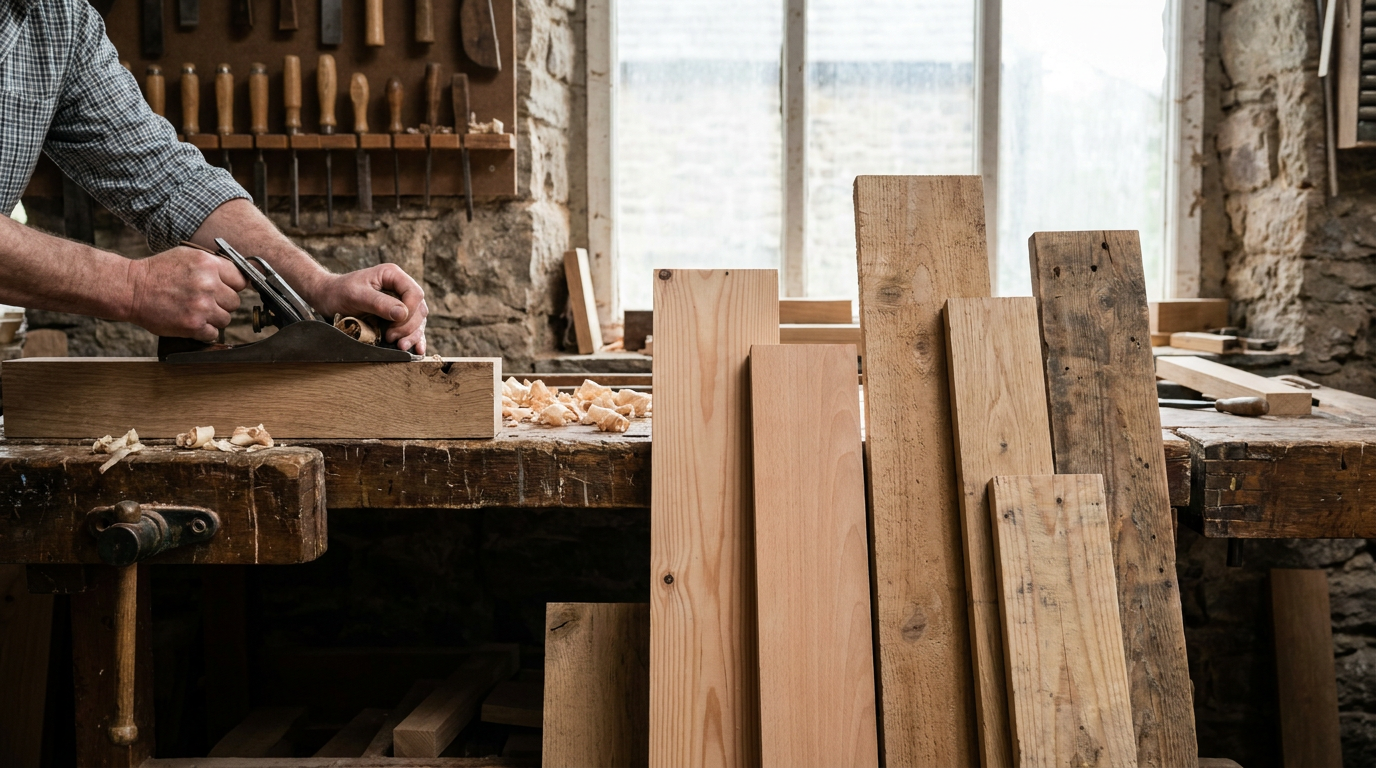
European oak is the heritage default for handmade kitchens in the UK. It is strong, stable, and takes hand-finishing beautifully. Daniel Fitzpatrick at Oak & Pine by Design has specified European oak on most of the workshop's shaker and traditional builds over 25 years, because the grain patterns in rift-sawn and quarter-sawn cuts reward traditional joinery. White oak suits contemporary interiors; red oak brings warmth to farmhouse styles.
Hard maple is the workshop's first choice for painted cabinets. Its tight, closed grain holds a flawless painted finish without bleed-through, which matters on shaker and slab doors where every surface shows. It also machines cleanly for dovetailed drawer boxes.
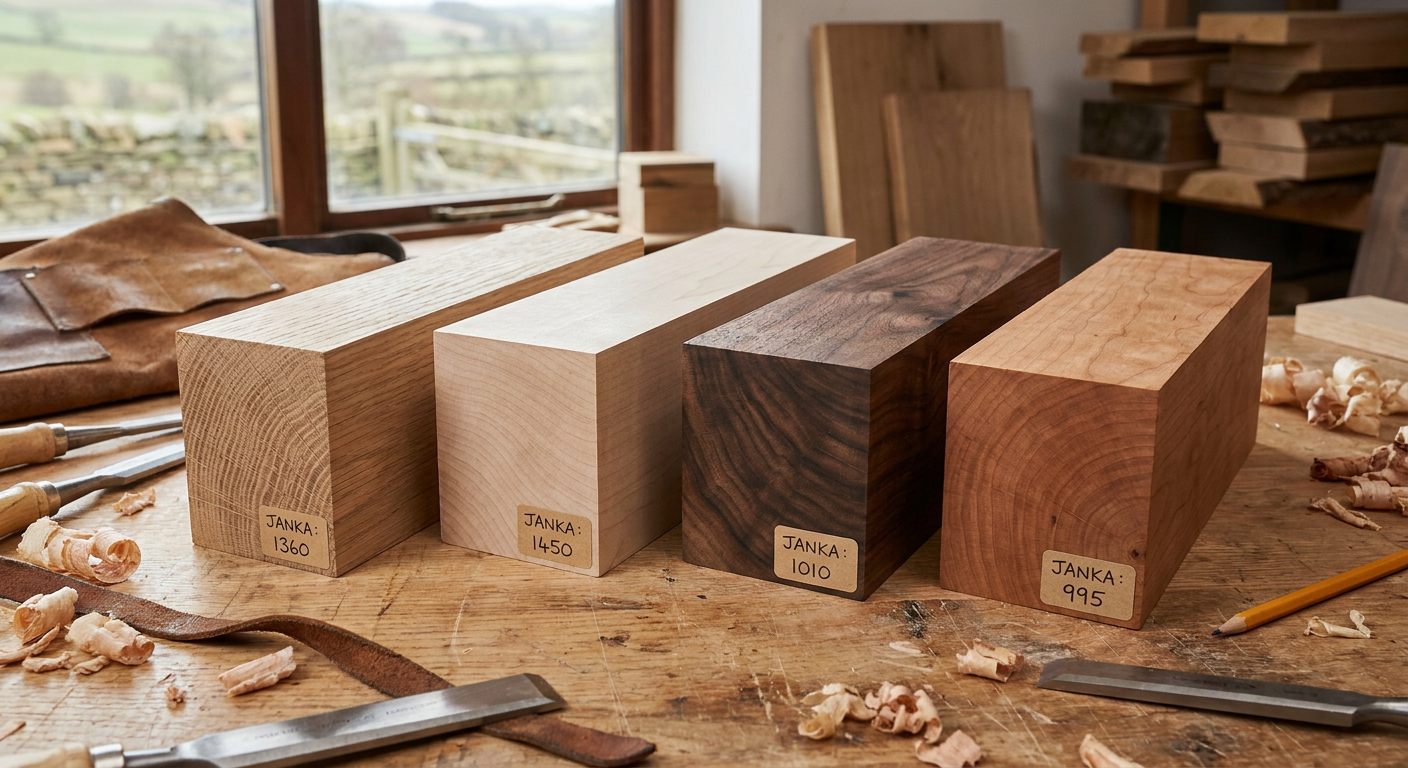
Walnut and cherry sit at the premium end. Walnut offers a dark, modern drama that softens to a warmer chocolate tone over time. Cherry deepens towards a rich auburn over the first five to seven years, a feature some clients love and others underestimate when choosing from a fresh sample.
The short-list decision rule
Use this workshop-tested rule of thumb: oak if you want stained timber and traditional joinery; maple if you want a painted finish; walnut or cherry if budget allows and you want a statement timber with natural ageing character; birch or pine only when cost decides and you accept dents as part of the patina.
What to do next
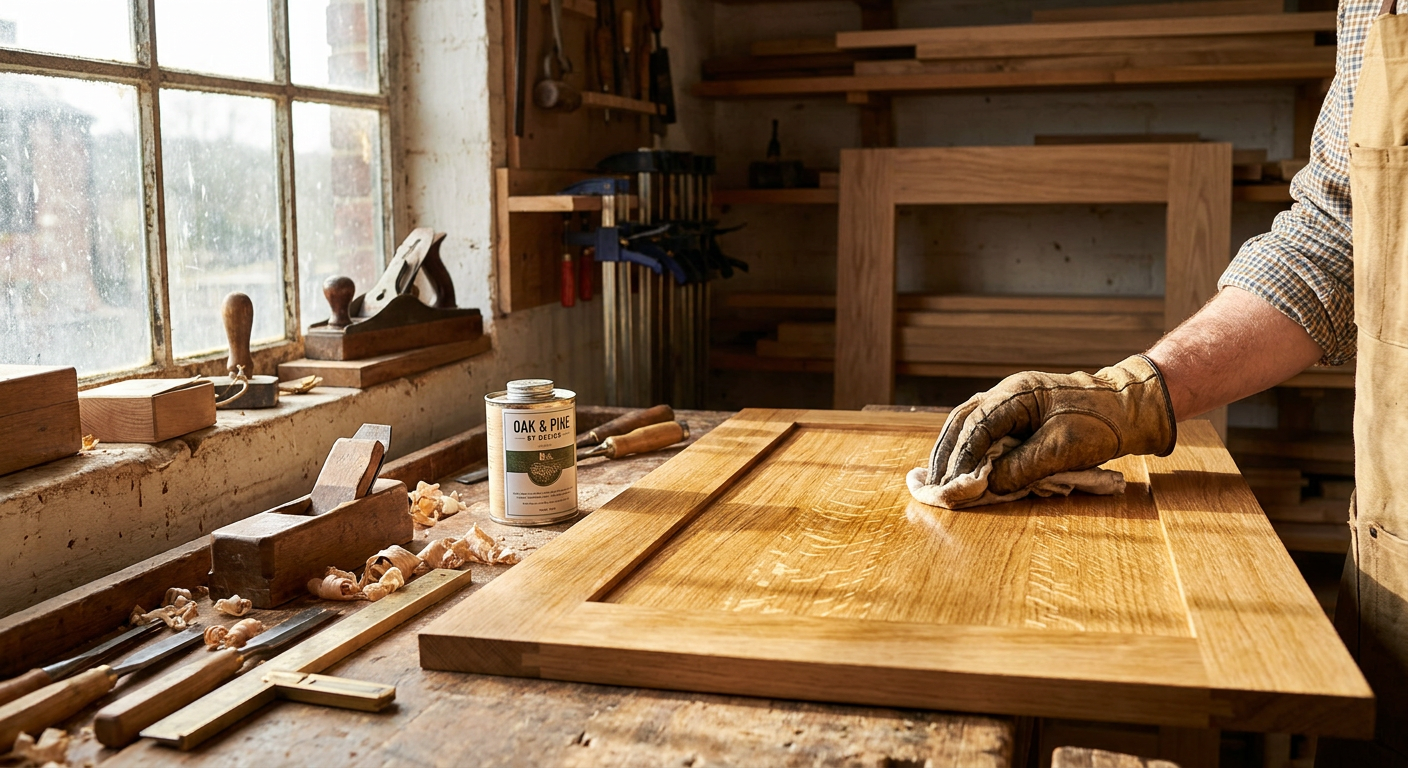
Request timber samples from the workshop. Hold them in your own kitchen, at different times of day, for 48 hours before deciding. Timber that looks flat in a showroom often reveals warm undertones near a south-facing window. Oak & Pine by Design sends hand-cut samples with finish options so you can compare each species side by side in your own room.
The Best Wood for Homemade, DIY, and Painted Cabinets Compared
What is the best wood for homemade cabinets?
Hard maple is the best wood for homemade cabinets when you want a dense, fine-grained timber that machines cleanly, resists dents, and takes paint without bleed-through. In our Yorkshire workshop, we reach for hard maple when a client wants a crisp painted shaker kitchen that will hold its line for twenty years. Oak runs a close second if you prefer a visible grain, and walnut is the choice for darker, statement pieces where budget allows.
Which type of wood is best for kitchen cabinets?
The best type of wood for kitchen cabinets is a hardwood with a Janka rating above 1,000 for doors and a stable sheet material for carcasses. Oak, maple, walnut, and cherry lead our handmade builds because they balance hardness, grain quality, and workability. Softwoods like pine work for painted cabinets in lower-traffic rooms, but they dent more easily and need a harder-wearing topcoat.
What wood do DIY kitchens use, and which takes paint best?
DIY kitchens typically use birch plywood for carcasses and either poplar, maple, or birch for doors, because these closed-grain hardwoods are affordable, stable, and accept paint evenly. Poplar is the painter's favourite: soft enough to sand quickly, yet it holds crisp edges on shaker doors. For stain-grade DIY projects, red oak and pine remain the most accessible timbers at UK timber merchants.
Janka hardness at a glance
The Janka scale measures resistance to denting, which matters when you are choosing timber for cabinets that will see daily knocks:
- Hard maple: ~1,450
- White oak: ~1,360
- Red oak: ~1,290
- European oak: ~1,360
- Walnut: ~1,010
- Cherry: ~995
- Beech: ~1,300
- Ash: ~1,320
- Hickory: ~1,820
- Pine: ~420
For painted cabinets, hardness matters less than grain tightness; for natural-finish doors, choose a rating above 1,000 to stay dent-free in a working kitchen.
Open grain vs closed grain
Oak, ash, and hickory are open-grain woods with visible pores that absorb stain richly but telegraph through paint unless filled. Maple, cherry, beech, poplar, and sycamore are closed-grain timbers with a smoother surface that finishes cleanly with minimal preparation. Sycamore in particular is a British-grown closed-grain hardwood that we have specified on painted Shaker commissions in the workshop, where its pale, even tone and minimal pore structure produce an almost glass-like painted face after priming. If you want a flat painted face, closed grain saves hours of filling and sanding.
Stain, paint, and finish absorption
Open-grain species drink in stain unevenly without a conditioner, while closed-grain woods can reject pigment if not prepped with a sanding sealer. For paint-grade cabinets, we specify maple, poplar, beech, or sycamore, then apply a shellac-based primer to prevent tannin bleed. For stain-grade work, oak and walnut reward you with depth and chatoyance that no painted finish can imitate.
Your next step
Decide first whether you want a painted or natural-wood kitchen, then match your timber to that finish. Book a design consultation with Oak & Pine by Design and we will walk you through samples, Janka data, and honest cost trade-offs for your specific room.
How Each Timber Actually Performs: Hardness, Grain, and Finish
Janka hardness and durability by species, plus open vs closed grain
The Janka scale measures how well a species resists denting, and the numbers guide everyday decisions in a working kitchen. Hard maple leads the mainstream pack at roughly 1,450, followed by white oak near 1,360 and red oak around 1,290. Hickory pushes past 1,800, making it the hardest cabinet timber in regular use. Ash weighs in at about 1,320 and beech near 1,300, putting both firmly in the durable bracket. Walnut sits softer at about 1,010, and cherry around 995, yet both still outperform daily knocks. Pine lands below 500, which is why it shows character marks quickly rather than wearing evenly.
Grain structure shapes how each board looks and finishes. Oak is open-grained, with visible pores that catch stain and read as texture across a door. Ash and hickory share that open character, while maple, cherry, birch, and sycamore are closed-grained, so the surface reads smoother and takes paint more evenly. Walnut falls between the two, with a moderately tight grain that suits both oil and paint. For cabinets that need a clean painted face, closed-grain species save hours of filling; for an oiled or stained timber look, open grain carries the character you want.
Stain, paint, and finish absorption across oak, walnut, maple, cherry, and beech
Oak drinks pigment deeply, which is why stained oak doors show pronounced grain contrast and that warm, traditional depth. Maple resists stain absorption in places, producing blotchy results without a controlled pre-treatment; we seal the surface first to keep the tone consistent. Cherry stains evenly but darkens further under UV, so a lighter initial finish ages into a richer tone within a few years. Walnut absorbs oil finishes predictably, and a single coat often delivers the colour you want.
Beech is a closed-grain hardwood that holds paint crisply, similar to hard maple, and it machines cleanly for painted shaker doors. For painted ranges across oak, walnut, maple, cherry, or beech, we recommend a primer plus two topcoats, with light de-nibbing between coats to stop grain raise on oak. Hand-application matters here: sprayed finishes sit on the surface, while brushed or hand-rubbed finishes work into the timber and age more gracefully in a lived-in kitchen.
Common Questions and What to Do Next
FAQ: the most expensive wood, the cheapest, and the best for kitchen carcasses
The most expensive timber for cabinet doors is walnut, prized across Yorkshire and the UK for its dark chocolate colour and tight grain. The cheapest practical option remains pine, supplied in our workshop as character-grade or reclaimed boards. For carcasses, our recommendation is European oak for painted shaker ranges and beech for natural-finish carcasses, thanks to their stability and screw-holding strength.
- Most expensive: Walnut, then cherry and figured maple.
- Most affordable: Pine (clear or character), then birch.
- Best carcass wood: Oak for paint, beech for stain, birch plywood where budget matters.
Our carcasses are traditionally joined using mortise-and-tenon, dovetailed, or housed techniques. Each panel is hand-selected for grain direction and moisture content before assembly.
Talk through your project with our workshop
If you are weighing timber options for a handmade kitchen, bring your questions to the people who will build it. Daniel Fitzpatrick personally reviews every commission, from initial sketch to final hand-finish, and will talk you through trade-offs in plain language.
When you contact us, have a rough sense of:
- Preferred style: painted shaker, natural oak, or a darker statement timber such as walnut.
- Room conditions: north-facing light, range-cooker heat, underfloor heating.
- Budget range per cabinet or for the full kitchen run.
- Any existing pieces, such as an heirloom table or a reclaimed pine dresser, you would like the new cabinets to sit alongside.
You can visit the workshop by appointment, or arrange a home consultation across Yorkshire and the North of England. Drawings, samples, and a written quote follow within two to three weeks, giving you time to live with the decisions before anything is cut.
Book a consultation with Oak & Pine by Design and start the conversation with a master craftsman rather than a salesperson.
Sources
- How to Choose the Best Wood for Custom Kitchen Cabinets - Ultimo Custom Cabinetry by Tuscan Hills
- Cabinetmaker's Guide to Choosing the Right Wood Species
- Best Wood For Kitchen Cabinets - Ace Cabinet Granite
- Best wood for custom cabinets 2026: Ultimate Guide
- Best Wood for Cabinets: Choosing the Right Material - Quality Custom Cabinetry
- The Most Popular Types of Wood for Custom Cabinets
- What is the best wood for cabinet making and kitchen ...
- What type of wood is best for Cabinets? : r/cabinetry